When the Life You Planned Doesn't Work Out: My Story of Starting Over and Finding Myself

The Life I Chose: Embracing Authentic Living and Finding My True Self
“You must give up the life you planned in order to have the life that is waiting for you.” — Joseph Campbell
The Life I Thought I'd Have
At 18, when I envisioned my future, I couldn't have imagined a single aspect of the life I live today. I was raised in a Modern Orthodox Jewish community, where, like many religious communities, marriage and tradition were central values.
When I was in college, studying to become a teacher, I genuinely felt I would get married at any moment. I still remember a study abroad trip in South Africa the summer after my freshman year, when I was in a car on the way to a weekend excursion with my new friends from the trip. We were happy, and they were all excitedly planning, "Next summer, same place!" I laughed and replied, "Next year?! By next year, I'll be married!"
We were in a car heading toward a weekend excursion, with bottles of wine being passed around, and everyone laughed at how out of place my comment was. But the truth is, I wasn't joking. Marriage at 20 was all I knew, and it was the main thing I was planning for.
Feeling Inadequate for Not Attaining the Life I'd Planned
Despite my best efforts, I didn't find the love I was looking for. By my mid-20s, it became clear that my life was veering off the path I had imagined. My friends were getting married, starting families, and "moving forward" with their lives, while I was still waiting for that part of my life to unfold. Because that was the only "next step" I knew, it felt as if my entire life was stuck — I was trapped in a perpetual state of inadequacy.
At the time, I was teaching science in a Modern Orthodox Jewish school and living in the same Brooklyn neighborhood where I grew up. Everywhere I went, I felt eyes of judgment on me. It seemed like everyone was wondering why I wasn't married yet. My life, by society's and even my own standards, was "falling short."
And yet, professionally, I was thriving. I was building new curriculums, inspiring my students, and attending grad school at night, graduating with honors and receiving an award for my thesis. But none of that seemed to matter. The single question I was constantly confronted with — "When are you getting married?" — overshadowed every accomplishment.
I internalized the shame and self-blame. I felt embarrassed to be seen. I was buried beneath society's version of how my life should look. For years, I clung to the belief that my happiness and sense of self depended entirely on fulfilling those expectations.
I have so many memories of that heavy shame. My grandfather yelling at me in front of hundreds at a cousin's bar mitzvah, calling me a disgrace for being single. My father nudging me to find a husband on a cousin's wedding dance floor. Overhearing my brother's friends criticize women my age just for being unmarried. Even grocery shopping felt stressful — I kept my head down, afraid of judging eyes. I was living a life of shame simply for not following the path I thought I was supposed to take.
Looking back now, I understand that I was only being seen for what I was not: for the life I was "supposed" to have but hadn't. And I allowed that perception to shape how I saw myself: as a failure.
Breaking Free from the Expectations
This difficult period lasted until around age 27, when I made a significant shift. I started seeing a therapist, who helped me understand that there was nothing wrong with me. I was simply living in an environment that had no space for a woman in my position.
Following his guidance, I made a bold decision: I moved out of my Brooklyn community and into Manhattan. The moment I stepped into my new city, a huge burden lifted. The watchful eyes and unspoken expectations that had always dictated my choices were gone.
On my first day in Manhattan, I walked out of Le Pain Quotidien with a scone and coffee, smiling for the first time in what felt like forever. I was free to simply be — without judgment, without questions, without the rigid rules I had been living under. I could explore and discover who I really was, unshackled from the expectations that had constrained me for so long.
A Pivotal Moment: Awakening My Authenticity
A few months after moving, I stood outside my apartment on 5th Avenue, watching the hustle and bustle of people around me. Each person seemed lost in their own unique world, fully themselves. And in that moment, it hit me: my uniqueness is my gift.
The only thing I can truly do that no one else can is be myself. That moment — vivid even years later — marked the start of my conscious journey into living authentically.
Finding My Own Voice: Authenticity Over Expectations
Around that time, I watched Brené Brown's TED Talk on vulnerability, which deeply resonated with me. I then read her book The Gifts of Imperfection, learning to embrace my flaws and see them as what make me, me. Society had long taught me to hide imperfections, to present a facade of perfection — and in doing so, I had built walls around my true self.
For the first time, I understood: the life I had been living wasn't truly mine. I had never truly been me before. I had inherited expectations from my community, my family, and society at large, letting them dictate how my life should look and who I should be.
Once I began to question these beliefs, I slowly let go of the pressures that had defined the life I thought I should have. I started asking myself: what life do I actually want to live?
Choosing an Inside-Out Approach to Living
This was the turning point in my journey. I began tuning inward instead of outward. Society had given me a script, but it wasn't one I needed to follow. My life wasn't about checking boxes or meeting expectations — it was about navigating my own unique journey.
At almost every moment, I would pause and ask: am I doing this because it aligns with others' expectations, or because it's an authentic expression of me?
One of the first changes I made was to stop wearing makeup. When I started teaching at 22, I wore it to appear professional and to win approval. While I loved teaching and was making an impact, I was known as "the pretty teacher." My work was being overshadowed by appearances.
When I moved to Manhattan and leaned into authenticity, I decided to let it go. At first, I kept my head low, adjusting to this new freedom. Years later, I don't wear makeup, and I hold my head high. When I do wear it now, it's never to prove worth — it's for fun, self-expression, and personal enjoyment.
Redefining Success: There's No Right Way to Do Life
When I stopped measuring myself by external standards, I realized there's no "right way" to live life — only my way. Authenticity became my guiding force. Society's voices still creep in sometimes, but I remind myself: just because my life doesn't fit the mold doesn't mean I'm doing it wrong.
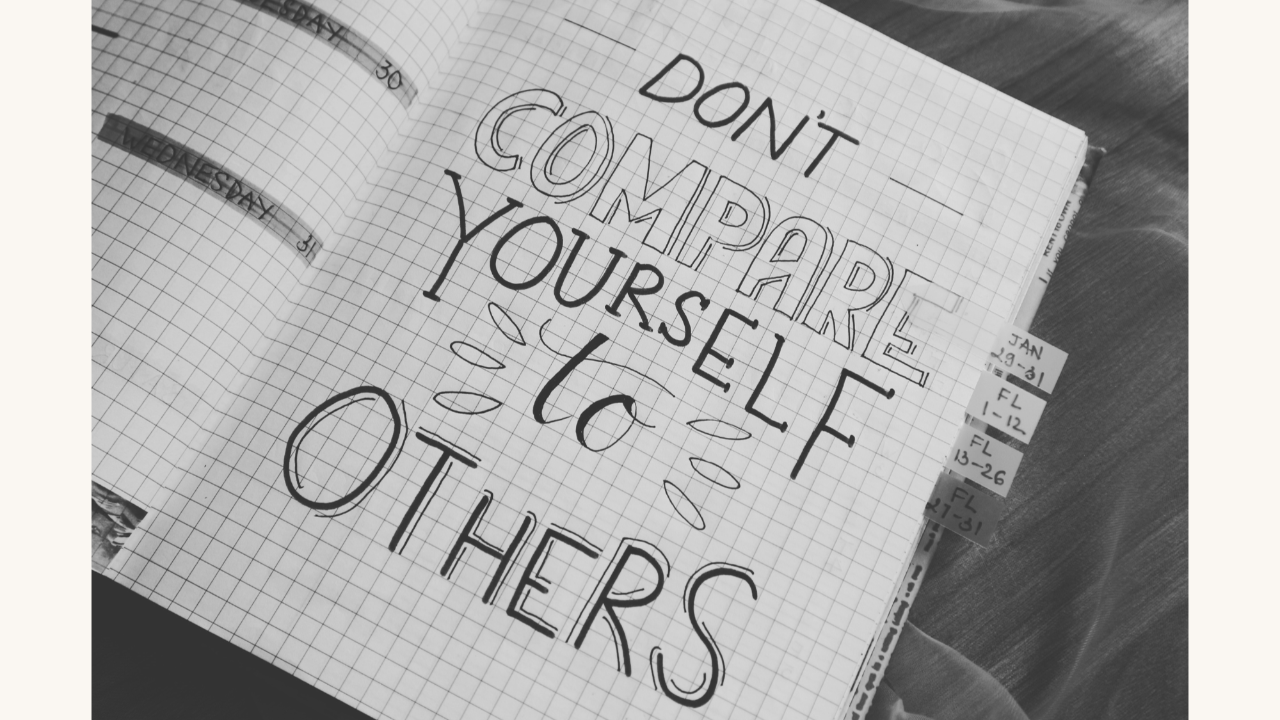
Letting go of the life I thought I should have allowed me to fully embrace the one I do have. Comparing our reality to an imagined life only keeps us stuck. True freedom comes from accepting and embracing our current journey.
I began challenging everything I thought I was supposed to be. I realized the definitions of success and happiness I'd inherited weren't mine — they belonged to society. I asked myself: what does success mean for me? What feels aligned and true to me?
Living authentically taught me that all the answers are within. There's no need to look outward for the right way. To read more about letting go of society's vision of success in order to create your own, read my article Finding Success: What Is It, Really?
Continually Choosing Authenticity
The biggest change in living authentically is how I feel in the world. I used to feel inadequate. Now I feel fully adequate because I am entirely, unapologetically me. My only measure is whether I am true to myself. My life is no longer dictated by someone else's idea of perfect — it is defined by me.
Living authentically isn't a one-time decision. It's a daily practice.
Notice when you're performing — are you doing something to please others or because it's genuinely yours?
Pause and reflect — choose the path that honors your inner voice instead of the external expectations and the "should."
Celebrate your wholeness — your success is in the fact that you showed up as you, not in what happens from there.
Letting go of the life I had envisioned was challenging, but necessary. Only when I released that vision could I embrace the life I was living, and the beautiful, expansive life that awaited me.
I am whole, complete, and beautiful — as myself.
And if you are standing right now in the wreckage of a plan that didn't work out, wondering who you are without the life you expected to have — I want you to know that the woman on the other side of that question is more herself than she has ever been. The life waiting for you is not a consolation prize. It is yours.
The Life That's Waiting for You
It wasn't until I let go of the life I thought I should have that I could fully embrace the life waiting for me. Our job isn't to meet society's standards; it's to be ourselves. That's the key to feeling whole, happy, and free.
If you want to explore more about how to live authentically, read my article Five Steps to Living More Authentically.
And if you're ready to stop living by someone else's rules and start building a life that actually feels like yours, I'd love to support you. Book a free consultation call here for an honest conversation about where you are and what you want next, and to see if coaching is a tool that can help you get there.
Author