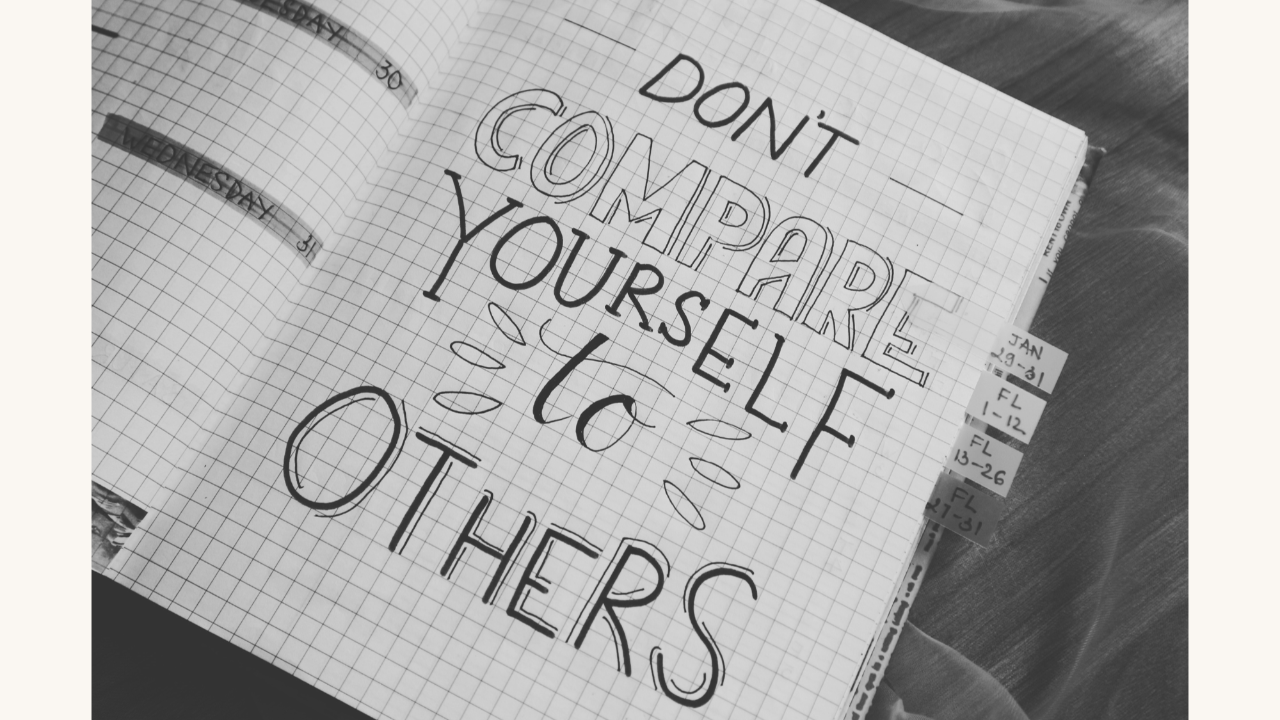
This New Year, You Don’t Need a New You. You Need to Stop Abandoning the Current One

Stop trying to change yourself; start coming home to who you are.
Every January arrives with the same promise and the same pressure.
This is the year you finally get it together.
This is the year you become more disciplined, more confident, more productive, more healed.
This is the year you stop being who you are and become who you think you should be.
This year, you become perfect.
The messaging is everywhere. New planners. New routines. New bodies. New identities. We are sold the idea that growth begins with reinvention and that transformation requires leaving our current selves behind.
On the surface, this sounds motivating. Hopeful, even. But underneath it carries a much quieter, more corrosive message: who you are right now is not enough.
And that message, even when wrapped in vision boards, goal setting, and personal development language, teaches something deeply harmful. It teaches self abandonment.
We learn to grow by rejecting ourselves. We decide that the current version of us is the problem. Too sensitive. Too slow. Too uncertain. Too emotional. Too behind. And instead of asking what we need, we ask how to fix ourselves.
But growth was never meant to come from rejection. It was never meant to come from self criticism or self betrayal. Real growth comes from staying.
Stop trying to change yourself
Somewhere along the way, personal growth became synonymous with self correction. As if the purpose of growth is to edit yourself into a more acceptable version. A version that rests less, needs less, feels less, and performs more. But if you pause and look honestly at how this approach feels in your body, it is rarely empowering. It is usually exhausting.
When growth is driven by the belief that you are fundamentally flawed, it becomes an endless chase. There is always another habit to fix, another milestone to reach, another version of you that feels just out of reach. And no matter how much you accomplish, it never quite feels like enough, because the foundation was never self trust. It was self rejection.
Growth does not ask you to abandon yourself. It asks you to understand yourself.
The subtle cost of “New Year, New You”
Most people do not fail at their New Year’s resolutions because they lack willpower or discipline. They fail because their goals were built on shame.
Shame that says you should be further along by now.
Shame that says rest is laziness.
Shame that says who you are today needs to be replaced.
When growth starts from shame, it becomes unsustainable. You spend the year trying to outrun yourself instead of listening to yourself. You override your own needs in the name of productivity. You force routines that look good on paper but quietly drain you. And when you eventually burn out, you do not question the system. You blame yourself.
But the problem was never your effort; it was the relationship you were taught to have with yourself and with goals.
If you look closely, many of the habits people are desperate to change are not flaws at all. They are adaptations. Coping mechanisms. Survival strategies that once served a purpose. Perfectionism may have protected you from criticism or chaos. People pleasing may have protected you from rejection or abandonment. Overworking may have protected you from feeling unworthy or unlovable.
These patterns did not appear because you are broken. They developed because you were trying to stay safe. Trying to rip these parts away without understanding them is not growth. It is violence toward yourself.
Growth is not becoming someone else
Real growth is far quieter than we are taught to expect.
It does not always look like dramatic transformation or radical reinvention. More often, it looks like learning how to sit with yourself without immediately reaching for distraction or self criticism. It looks like listening to your body instead of overriding it. It looks like noticing when you are pushing yourself out of fear rather than alignment.
Growth does not ask you to erase who you are. It asks you to know who you are. To love who you are. To work with yourself, not against yourself. And ultimately, to become who you already are.
And that is a very different thing.
Many people think authenticity means becoming louder, bolder, more confident, or more visible. But authenticity is not about adding more layers or traits to your personality. It is about removing what never belonged to you in the first place: the roles you learned to play to be accepted; the beliefs you absorbed about what makes someone worthy; the expectations you internalized that were never aligned with your values or truth.
Authenticity is not a personality upgrade. It is a homecoming.
Unbecoming what you are not
There is a quote that captures this idea beautifully:
“Maybe the journey isn’t so much about becoming anything. Maybe it’s about un-becoming everything that isn’t really you, so you can be who you were meant to be in the first place.” - Paulo Coelho
This reframes personal growth entirely. Instead of asking who you need to become, it asks what you need to release. Instead of striving toward an idealized future self, it invites you to peel back the layers of conditioning, fear, and expectation that have pulled you away from yourself.
So much of what we call growth is actually a process of remembering. Remembering what feels true in your body. Remembering what matters to you when no one is watching. Remembering who you were before the world told you who to be.
This is the heart of authenticity. Not becoming someone new, but returning to yourself.
The difference between self improvement and self loyalty
Self improvement says, “I’ll accept myself once I change.”
Self loyalty says, “I’ll stay with myself while I grow.”
One is conditional. The other is grounding.
When you practice self loyalty, growth stops feeling like punishment and starts feeling like care. You no longer force yourself into routines that drain you just because they are popular or productive. You choose rhythms that support your nervous system, your energy, and your values.
You stop chasing goals that look impressive but feel empty. Instead, you move toward what feels honest and sustainable, even if it looks quieter or slower from the outside.
And perhaps most importantly, you stop treating discomfort as a sign that something is wrong with you. Discomfort becomes information, not a verdict. It becomes something to listen to rather than something to fix. This is where real self trust is built.
What if this year is about uncovering, not reinventing?
Instead of asking, “Who do I want to become this year?” try asking something softer.
Who am I when I am not performing?
Who am I when I am not trying to prove anything?
Who am I when I feel safe enough to tell the truth?
These questions do not demand immediate action or productivity. They ask for presence. And presence is where real change begins.
You do not need to add more habits, goals, or labels to grow. You may need to release the constant pressure to be different. You may need to stop overriding your own signals in the name of productivity or success. You may need to let yourself be human.
Stripping away what is not you
Growth does not always look like becoming more. Sometimes it looks like letting go.
Letting go of saying yes when you mean no. Letting go of relationships that require you to shrink or perform. Letting go of standards that were built on fear rather than truth. Letting go of "truths" you live by that aren't even your own.
This kind of growth can feel deeply unsettling at first. When you stop abandoning yourself, you may disappoint people who benefited from you doing so. You may feel unfamiliar to yourself when you are no longer operating on autopilot.
That does not mean you are doing it wrong. It means you are becoming more honest.
Honesty with yourself is often quieter than people expect. It does not always come with certainty or confidence. Sometimes it comes with tenderness. Sometimes with grief. Sometimes with relief. All of it belongs.
Saying no so you can say yes to yourself
Boundaries are not walls. They are acts of self recognition. Every time you say no to what is misaligned, you create space to say yes to yourself. To your energy. To your values. To your needs. This is not selfish. It is sustainable. A life built on self abandonment eventually collapses under its own weight. A life built on self loyalty has room to breathe.
You are not behind
If you are entering this year feeling tired, unsure, or discouraged, nothing has gone wrong.
You are not late to your life. You are not failing at personal growth. You are not broken for needing rest, clarity, or support before action.
You are allowed to move forward without leaving yourself behind.
You do not need a new personality, a new body, or a new identity to grow. You need safety with yourself. From that place, change happens naturally, without force.
This is the work I return to again and again with the people I support. Not fixing who they are, but helping them stay. Helping them listen. Helping them rebuild self trust. Helping them uncover what has always been there beneath the pressure to be someone else.
This year, you do not need a new you. You need to stop abandoning the one you already are. And that might be the most powerful and transformational beginning of all.
Where support comes in
If you are exhausted from trying to fix yourself, reinvent yourself, or live up to someone else’s version of who you should be, you are not alone. The work I do is not about changing who you are. It is about helping you come back to yourself. Learning how to live with more self trust, honesty, and ease. Letting go of patterns that no longer serve you and the parts of your life that aren't truly your own, and reconnecting with what feels true.
If you are ready to stop performing and start living from a place of authenticity, this is the journey we walk on together. Schedule your 15 minute consultation call to learn more about authenticity coaching. You do not need to become someone new to grow. You need a safe space to be who you already are.
Author