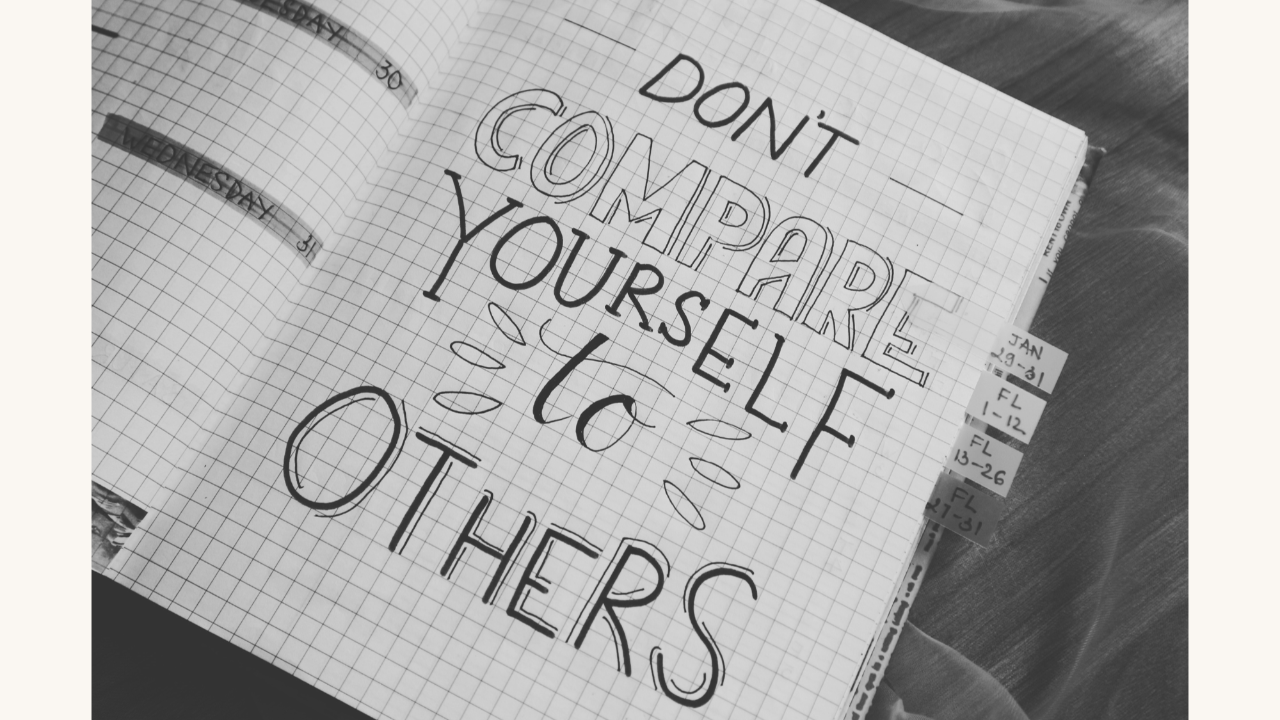
How to Break Free from Limiting Beliefs and Rewrite Your Story
We all carry stories about ourselves. Quiet, persistent narratives about what we're capable of, what we deserve, what's possible for someone like us. Most of us have been carrying these stories for so long that we've stopped noticing they're stories at all. They've become invisible. They just feel like truth.
I'm not the kind of person who does things like that. I'm not smart enough for that. I'm too far behind. It's too late for me. People like me don't get to have that.
These are limiting beliefs. And they are not facts. They are filters through which you experience your life, and they quietly shape every decision you make, every opportunity you pursue or avoid, every risk you take or talk yourself out of.
Here is what I know from my own journey and from years of coaching women: your limiting beliefs are not fixed features of your personality. They are learned patterns. And what was learned can, with genuine intention and consistent practice, be unlearned.
This article is about doing that.
What Limiting Beliefs Actually Are
A limiting belief is a deeply held conviction, often operating below the level of conscious awareness, that places an invisible ceiling on what you believe is possible for you. It acts as a boundary you don't even realize you're not crossing.
Limiting beliefs are not random. They form through specific experiences, often early ones. A parent who expressed doubt in your abilities. A teacher whose criticism you absorbed as truth. A relationship that left you believing you weren't worth loving well. A community whose expectations you internalized as the only acceptable definition of a good life. A failure that you decided proved something permanent about your capabilities rather than something temporary about that particular attempt.
Over time, a single experience or message becomes a belief. The belief gets reinforced by selective attention — your mind, looking for evidence that confirms what it already believes, finds it everywhere and filters out what contradicts it. The belief begins to feel like an obvious fact about reality rather than a story that was written under specific circumstances and that you've been repeating ever since.
The tricky thing about limiting beliefs is how reasonable they feel from the inside. They don't announce themselves as distortions. They announce themselves as realism. As self-awareness. As just knowing yourself. Distinguishing between genuine self-knowledge and fear-based story is one of the most important and most difficult things you can do for your own growth.
Where Limiting Beliefs Come From
Understanding where your limiting beliefs originated matters. Not to assign blame or to stay stuck in the past, but because seeing the origin of a belief makes it easier to hold it with some distance. When you understand that a belief came from a specific experience, a specific person, a specific cultural message, it becomes easier to question whether it's actually true rather than simply accepting it as an obvious feature of reality.
Limiting beliefs about yourself often come from early experiences of being told, directly or indirectly, that you were not enough. Not smart enough, not disciplined enough, not talented enough, not lovable enough. Children absorb these messages deeply and build their self-concept around them. By adulthood, the original message is often long forgotten but the belief it produced is still running in the background, shaping every choice.
Limiting beliefs about what's possible for you often come from the environment you grew up in. From watching the women around you and absorbing what their lives looked like as the implicit template for what a woman's life can look like. From a community with specific expectations about education, career, relationships, and the proper order of things. From a culture that consistently sent messages about what women are supposed to want and what they shouldn't want too much.
Limiting beliefs about the world often come from painful experiences that were interpreted as evidence of how things work. If vulnerability was repeatedly met with dismissal, you may have concluded that the world is not safe for authenticity. If effort was repeatedly met with disappointment, you may have concluded that trying is pointless. These are not irrational conclusions given the experiences that produced them. They are the mind's best attempt to make sense of what happened and to protect you from it happening again.
The protection comes at a cost. Because those beliefs don't stay confined to the original painful situations. They generalize. They apply everywhere. And they keep you small in ways that serve no one, including yourself.
How Limiting Beliefs Show Up in Your Daily Life
Limiting beliefs are rarely loud or obvious. They tend to operate quietly in the background, showing up as hesitation, avoidance, and the particular feeling of talking yourself out of something before you've even fully considered it.
They show up in your career when you don't apply for the opportunity because you're not quite qualified enough yet and the bar keeps moving so you're never quite ready. When you minimize your contributions in a meeting because who are you to take up that much space. When you stay in work that doesn't fit you because at least it's stable and who knows if anything better is really available to someone like you.
They show up in your relationships when you accept treatment that doesn't reflect your worth because somewhere underneath you don't fully believe you deserve better. When you don't express your real feelings because what if they're dismissed or treated as too much. When you settle for connection that stays at the surface because showing the real you feels too risky.
They show up in your sense of self when you dismiss compliments before they can land, when you attribute your successes to luck or timing rather than to your own capability, when you hold yourself to standards you would never apply to someone you love.
They show up as the voice that says not yet, not you, not possible. The voice that sounds like wisdom but is actually just fear wearing the costume of realism.
The Connection Between Limiting Beliefs, Self-Love, and Authentic Living
Limiting beliefs and self-love are fundamentally incompatible. You cannot genuinely love yourself while simultaneously believing, at a deep level, that you are not capable, not worthy, not deserving of the things you want most.
This is one of the most important things I work on with the women I coach. Because so many women try to practice self-love on top of a foundation of limiting beliefs, and it doesn't hold. You can do the affirmations and take the bubble baths and still feel fundamentally stuck, because the deeper story about what you're worth and what's possible for you hasn't changed.
Real self-love requires addressing those deeper stories. Not forcing yourself to think positive thoughts over the top of them but genuinely examining them, questioning their validity, and consciously choosing more accurate and more generous beliefs to replace them.
Authenticity is equally at stake. When limiting beliefs tell you that who you really are is not enough or not acceptable, the natural response is to perform a more acceptable version of yourself. To filter, to manage, to hide the parts that feel risky. That performance is exhausting and it keeps genuine connection and genuine fulfillment out of reach.
As we explored in living from the inside out, authentic living requires trusting that your genuine self is worth showing up as. And that trust is impossible to build while limiting beliefs are running unchallenged in the background, insisting that the real you is not quite good enough.
How to Identify Your Own Limiting Beliefs
Before you can change a belief you have to see it clearly. And because limiting beliefs feel like facts, this requires a specific kind of honest self-examination.
Start by paying attention to your inner dialogue, particularly in moments of uncertainty, opportunity, or challenge. Notice the recurring phrases. The ones that come up when someone offers you a compliment, when a new opportunity presents itself, when you're considering something that matters to you. I'm not ready. I'm not the kind of person who does that. That's not realistic for someone in my situation. I always mess things like this up.
Those phrases are pointing directly at your limiting beliefs.
Notice your patterns of hesitation and avoidance. Think about the opportunities you've declined, the conversations you've avoided, the risks you've consistently talked yourself out of. Ask yourself honestly: what did I tell myself to justify not going for it? The answer almost always contains a limiting belief.
Use journaling as a tool for this kind of excavation. Write down the recurring stories you tell about yourself, your capabilities, your worth, your possibilities. Then ask yourself of each one: is this a fact or is this a story? Where did this belief come from? What experience or message produced it? What evidence do I have that it's true? What evidence contradicts it?
That last question is often the most revealing. Because most limiting beliefs, when examined directly, are not actually well-supported by evidence. They feel true. But feeling true and being true are two different things.
How to Break Free from Limiting Beliefs: Practical Steps
1. Question the belief directly.
Every time you notice a limiting thought, stop treating it as fact and start treating it as a hypothesis. Ask yourself: is this actually true? Not does it feel true, but is there real, verifiable evidence that this is an accurate description of reality?
Then look for contradictions. Has there ever been a time when the belief wasn't accurate? Do you know people who disprove it with their own lives? What would a fair and objective observer say about the evidence?
This process doesn't instantly dissolve the belief but it begins to loosen its authority. When a belief stops feeling like an obvious fact and starts feeling like one possible interpretation among several, it loses the power to make your decisions for you.
2. Trace the limiting belief it to its origin.
Ask yourself where this belief came from. Who taught you this? What experience produced it? What were the specific circumstances under which you concluded this was true about you or about the world?
Often when you trace a belief back to its origin you can see that it was formed under specific conditions that no longer apply. A belief formed by a critical parent when you were seven years old does not have to be the governing principle of your life at thirty-five. Seeing the origin helps you hold it as a story that was written rather than a truth that was discovered.
3. Reframe the belief deliberately.
Once you've questioned the belief and traced its origin, consciously reframe it. Not into something you don't believe at all — that will feel false and won't stick. But into something more accurate and more generous.
I'm not smart enough becomes I am still learning and I have gotten further than I thought possible before. I always mess things up becomes I make mistakes and I am genuinely capable of growth and course correction. It's too late for me becomes I am starting from where I am and I have more time and more capacity than fear is telling me.
The reframe doesn't have to feel completely true immediately. It has to feel more true than the limiting belief. That gap is where the work lives.
4. Take action that contradicts the belief.
Beliefs change through evidence. And the most powerful evidence comes from your own behavior. When you act in a way that is inconsistent with a limiting belief, you generate real lived evidence that the belief is not accurate.
If you believe you are not the kind of person who speaks up, speak up once. If you believe it's too late to pursue something that matters to you, take one step toward it. If you believe you are not worthy of healthy love, set one limit that reflects your actual worth.
Each action does two things simultaneously. It provides concrete evidence against the limiting belief. And it builds self-trust — the experience of being someone who shows up for themselves rather than someone who is controlled by fear-based stories.
Start small. Small actions taken consistently are far more powerful than grand gestures taken once. The brain learns through repetition. Every time you act from your empowering belief rather than your limiting one, you strengthen the new neural pathway. Over time, the new belief begins to feel as natural and automatic as the old one did.
5. Practice self-compassion throughout.
Changing deep-seated beliefs is slow and nonlinear work. You will have days when the old stories feel as loud and convincing as ever. You will catch yourself operating from a limiting belief you thought you'd already changed. You will take two steps forward and one step back and sometimes it will feel like no steps at all.
This is normal. It does not mean you are failing. It means you are human, doing genuinely difficult inner work.
Meet those moments with the same compassion you would offer a close friend who was struggling with the same thing. Not bypassing the difficulty or pretending everything is fine, but holding yourself with genuine kindness rather than harsh self-judgment. That compassion is not a luxury. It is the condition under which real and lasting change becomes possible.
6. Build an environment that supports the new belief.
You do not change your beliefs in isolation. The people you spend time with, the content you consume, the spaces you inhabit all either reinforce your limiting beliefs or challenge them.
Deliberately seek out people who operate from the beliefs you're trying to build. People who embody the possibility that what you want is achievable. People who treat you as someone capable of growth rather than fixed in place. Notice how much easier it is to believe in yourself when the people around you also believe in you.
Curate your environment intentionally. This is not about filtering out all challenge or difficulty. It is about making sure that your daily life contains enough genuine support and enough evidence of possibility to counteract the gravitational pull of old patterns.
What Changes When You Do This Work of Breaking Limiting Beliefs
The women I've watched break free from their most deeply held limiting beliefs don't always describe the experience as dramatic. It's more like something loosening. Like a ceiling they didn't realize was there lifting slightly and then lifting more.
They describe making decisions differently. Noticing the fear-based story when it arrives and being able to ask: is this true, or is this just the old belief? And having enough space between the belief and themselves to choose a different response.
They describe taking risks they never would have taken before. Not because the fear is gone but because the belief that the fear is accurate — that it's telling them something true about their capabilities or their worth — has weakened enough that they can move through it.
They describe their relationship with themselves changing. Becoming kinder, more honest, more genuinely supportive. The inner voice that used to sound like a harsh critic begins to sound like someone who is actually on their side.
And they describe something that is hard to put into words but that every woman who has done this work recognizes: a feeling of taking up more space in their own life. Of being more present, more themselves, more genuinely here. Not because everything is perfect or resolved. But because the story that was keeping them small has lost its grip.
That is what breaking free from limiting beliefs makes possible. Not a perfect life. A real one. Genuinely, fully, unmistakably yours.
Seeking Support as You Break Free from Limiting Beliefs?
If you recognize yourself in this article and you're ready to examine and rewrite the beliefs that have been quietly running your life, coaching is a powerful space to do that work. As a certified life coach for women specializing in self-love and authenticity, helping women break free from the stories that keep them small is at the heart of everything I do.
Book a free consultation call here. No pressure, just an honest conversation about where you are and what you want next. Or explore my 1:1 coaching packages here.
And if this resonated, these articles might too:
How to Overcome People Pleasing
Overcoming Self-Doubt: Unleash Your Inner Confidence
Why Self-Love Is Important and Five Practical Tips to Love Yourself More
Your limiting beliefs are not facts. They are stories. And you have always had the power to write a different one.
Author