How to Stop Comparing Yourself to Others and Embrace Who You Are
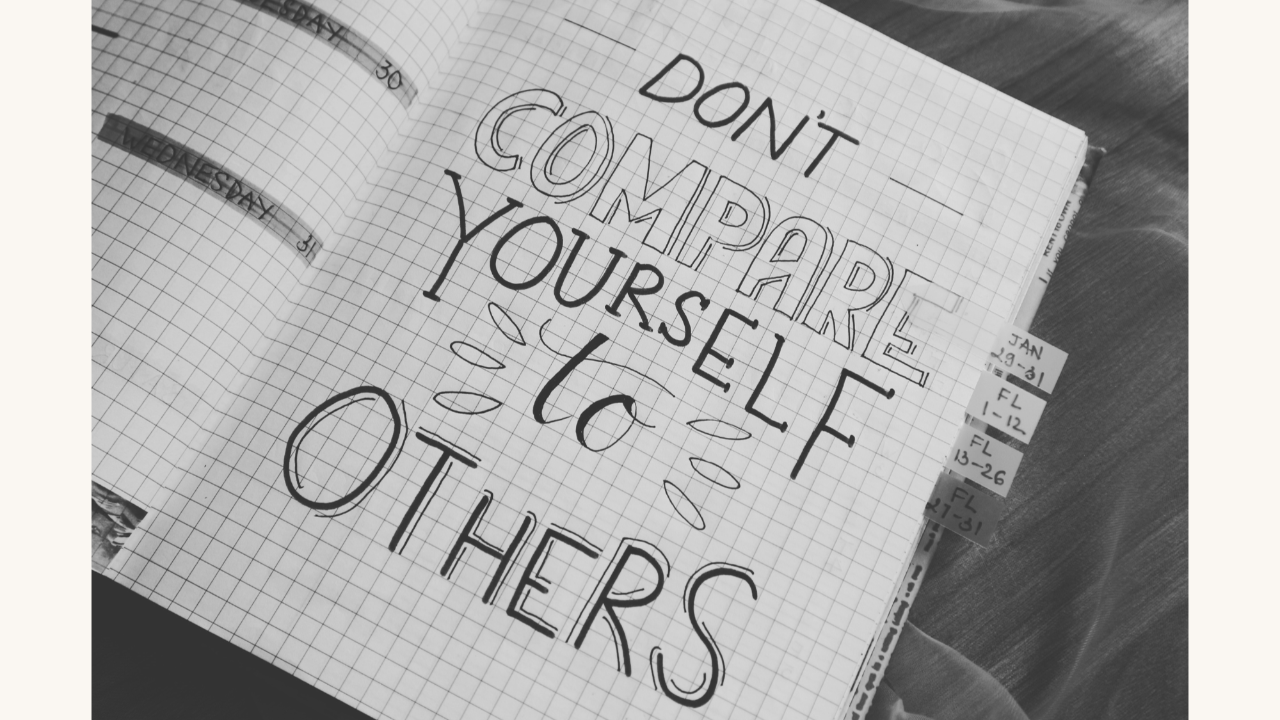
You're scrolling through your phone and you see someone from college who just got promoted, got engaged, bought a house, or posted a photo that makes their life look effortlessly beautiful. And within seconds, without even choosing to, you're measuring yourself against them. Your life against theirs. Your timeline against their timeline. Your body, your career, your relationship, your progress — all of it suddenly feeling slightly less than it did five minutes ago.
That is comparison. And it is one of the quietest, most persistent ways women undermine their own happiness and self-worth.
Comparison isn't new, but social media has made it relentless. What used to happen occasionally, running into someone doing better than you and feeling that familiar pang, now happens dozens of times a day. Every scroll is a potential comparison trigger. Every highlight reel curated to look like someone's best life held up against the full, complicated, unfiltered reality of your own.
As a life coach for women, comparison is something I come back to constantly. Not because the women I work with are insecure or shallow, but because comparison is a deeply human pattern that gets in the way of self-love, authentic living, and genuine fulfillment in a very specific and damaging way. This article is about understanding that pattern and learning how to break free from it.
Why We Compare Ourselves to Others
Comparison is not a personal failing. It's a deeply ingrained human tendency with roots that go back much further than Instagram.
From an evolutionary standpoint, comparing yourself to others served a real purpose. It helped you assess your standing within a group, identify threats, and understand where you fit. In a social species where being part of the group meant survival, knowing how you measured up mattered.
The problem is that our brains haven't fully caught up with the world we now live in. We're wired to compare, but we're doing it in an environment that our nervous systems were never designed for. Instead of comparing ourselves to a small community of people we actually know in the full context of their lives, we're comparing ourselves to thousands of people, most of whom we barely know, in the most curated and flattering moments of their existence.
There's also the role of social conditioning. Women in particular are socialized to measure themselves against each other. To assess where they stand in terms of looks, relationships, achievements, and life milestones. The culture around women, from magazines to social media to casual conversation, is saturated with comparison. Who has what, who's doing what, who's ahead and who's behind.
And underneath all of it, for most women, is a question they're trying to answer through comparison: am I enough? Am I doing okay? Am I on the right track? Comparison is an attempt to get an answer to that question from the outside. The tragedy is that it never actually provides one.
What Comparison Is Really Costing You
The cost of chronic comparison goes deeper than occasional bad feelings after scrolling through social media.
It erodes self-worth steadily over time. Every time you measure yourself against someone else and find yourself coming up short, you chip away at your own sense of value. And because comparison almost always involves looking at someone else's strengths against your own weaknesses, or their highlights against your everyday reality, you will almost always come up short. It's a game you cannot win.
It robs you of your present moment. Comparison pulls you out of your own life and into an imagined version of someone else's. While you're measuring your progress against theirs, you're not actually present in your own experience. You're not noticing what's good about where you are, what you've built, who you are right now. You're somewhere else, in a comparison that has nothing to do with your actual life.
It distorts your perception of your own progress. When you're constantly measuring your journey against other people's, you lose the ability to see your own growth clearly. You might be making genuine, significant progress and not be able to feel it because someone else appears to be further along. Comparison warps your ability to see yourself accurately.
It undermines authenticity. When you're focused on what other people have and what their lives look like, you inevitably start to want what they have rather than what you actually want. Your own desires get muddied by what looks desirable from the outside. And when your goals and choices are shaped by comparison rather than your own values, you end up pursuing a life that isn't really yours.
And perhaps most painfully, it steals joy. Something can feel genuinely good until comparison takes it away. Your achievement, your relationship, your body, your home can feel like enough until you see someone else's and suddenly it doesn't anymore. Comparison has a unique ability to retroactively diminish things that were genuinely meaningful before you saw what someone else had.
The Comparison Trap and Social Media
It would be dishonest to talk about comparison without talking directly about social media, because for most women it has become the primary arena where comparison happens.
The important thing to understand about social media is that it is not reality. It is a curated highlight reel. The images you see have been selected, filtered, framed, and sometimes staged. The moments you're comparing yourself to are the ones someone chose to show, which by definition are not representative of the full picture.
Nobody posts their hard mornings, their relationship struggles, their professional setbacks, their days when nothing goes right and they feel like they're failing at everything. What you see is the best version of someone's life, presented in the best possible light. And you're comparing that to your unfiltered, behind-the-scenes reality.
That comparison is inherently unfair to you. It is comparing incompatible things. And knowing that intellectually doesn't always make it feel less real, but it's worth reminding yourself of regularly.
It's also worth considering your relationship with social media more broadly. How do you feel while you're scrolling? After you're done? If the answer is consistently worse than before you opened the app, that's information worth acting on. Setting intentional limits on your social media consumption, curating your feed to include content that genuinely uplifts you, and being more conscious about when and why you scroll are all practical steps worth taking.
The Connection Between Comparison and Self-Love
Comparison and self-love cannot truly coexist. Not because you have to be perfect to love yourself, but because genuine self-love involves accepting and honoring who you actually are. And comparison is fundamentally about measuring who you are against who someone else is and finding yourself lacking.
When self-love is present, comparison loses most of its power. Not because you stop noticing other people or stop feeling inspired by what they've built. But because your sense of your own worth is no longer dependent on how you stack up against them. Their success stops being a threat to your sense of value because your value isn't being measured that way anymore.
Building genuine self-love means developing a relationship with yourself that doesn't require you to be better than anyone else. It means knowing your own worth independent of anyone else's accomplishments, appearance, or life circumstances. It means being able to genuinely celebrate someone else's success without it diminishing your own sense of what you have and who you are.
That is a profound shift. And it is absolutely possible.
The Connection Between Comparison and Authenticity
There's a direct line between chronic comparison and losing your authentic self.
When you're constantly measuring yourself against other people, you start to want what they have, to be what they are, to live how they live. Your own desires and values get crowded out by what looks appealing from the outside. Over time you can find yourself pursuing goals that were never really yours, living a version of a life that was assembled from other people's highlight reels rather than your own genuine vision.
Authentic living requires knowing what you actually want, separate from what looks desirable when you're comparing. It requires getting quiet enough inside to hear your own voice over the noise of everyone else's curated existence. It requires trusting that your unique path, with its own timing and its own shape, is valid even when it doesn't look like anyone else's.
One of the most liberating realizations in this work is that there is no one right way to do life. There is no universal timeline you're ahead of or behind. There is just your life, your values, your journey, your version of what a meaningful and fulfilling existence looks and feels like. Comparison collapses when you fully embrace that truth.
How to Stop Comparing Yourself to Others: Practical Steps
1. Notice when you're comparing and name it.
Start with awareness. Most comparison happens automatically, below the level of conscious choice. You're scrolling, you see something, and the comparison is already happening before you've decided to engage with it. Start noticing this pattern. When you catch yourself in a comparison, name it. "I'm comparing right now." That pause creates space between the trigger and the spiral.
2. Ask what the comparison is really about.
Comparison is almost never just about the surface thing. When you feel that pang looking at someone's life, there's usually something underneath it worth paying attention to. Are you longing for something you've been ignoring in your own life? Are you afraid you've made wrong choices? Are you measuring yourself against a standard that isn't actually yours?
The comparison often points to something real. Not that you're behind or not enough, but that there's something you want or something you're afraid of that's worth looking at directly rather than through the distorted lens of comparison.
3. Curate your environment.
You have more control over your comparison triggers than you might realize. Unfollow accounts that consistently make you feel worse about yourself. Spend less time in environments, online or in person, where comparison is the primary currency. Seek out people and content that inspire you without making you feel like you're falling short.
This isn't about avoiding anything that challenges you or makes you stretch. It's about being intentional about what you let into your mental space and what effect it has on how you feel about yourself.
4. To stop comparing yourself to others, redirect your focus to your own journey.
The antidote to comparing yourself to others is getting deeply invested in your own path. When you have a clear sense of what you value, what you're building, and what matters to you specifically, other people's journeys become less relevant because you're not using them as the measuring stick.
Ask yourself regularly: what does progress look like for me, based on my own values and goals? Am I moving in a direction that feels meaningful and true to who I am? These questions keep you anchored in your own life rather than constantly measuring it against someone else's.
5. Practice genuine celebration of others.
One of the most powerful practices for breaking the comparison habit is learning to genuinely celebrate other people's successes without making them about you. When someone achieves something, can you feel happy for them without immediately asking what it means about where you are?
This takes practice. The first few times you try it, it might feel forced. But over time, developing the genuine ability to celebrate others, not as a performance of generosity but as a real experience of joy for them, loosens the grip of comparison significantly. Their success stops being a threat and starts being just what it is: something good happening for someone you know.
6. Keep a gratitude and progress journal.
Comparison pulls your attention outward and toward lack. Gratitude and progress tracking pull your attention inward and toward abundance. A regular practice of noting what you're grateful for in your own life and what progress you've made, however small, is one of the most effective ways to counteract the distorting effect of comparison.
Not toxic positivity. Not pretending everything is perfect. Just a genuine, consistent practice of noticing what is good and what is working in your own life, on your own terms.
7. Build your self-worth from the inside out.
The deepest solution to chronic comparison is the same one that comes up again and again in this work: building genuine self-worth that doesn't depend on how you measure up to anyone else.
When your sense of value comes from inside you rather than from external benchmarks, comparison stops being destabilizing. Other people can be thriving, succeeding, and living beautiful lives, and none of it has to touch your sense of who you are and what you're worth. Their abundance doesn't diminish yours. Their progress doesn't mean you're behind.
That kind of internal foundation takes time to build. It's built through self-love, through authenticity, through consistent practice of treating yourself as someone whose worth is inherent rather than earned. But it is the thing that finally, genuinely, makes comparison lose its power.
What Life Looks Like When You Stop Comparing
Women who break the comparison habit describe something that feels like breathing more freely. Like there's more space in their own life because they're no longer constantly measuring it against everyone else's.
They find themselves more present. More able to enjoy what they have without the shadow of what someone else has hovering over it. More genuinely invested in their own journey because they're not constantly checking how it looks relative to other people's.
They find their own desires get clearer. When the noise of comparison quiets down, what you actually want, separate from what looks appealing from the outside, becomes easier to hear. And making choices from that place, from your own genuine values and desires, creates a life that feels far more satisfying than any life assembled from other people's highlight reels ever could.
Seeking Support to Stop Comparing Yourself?
If you recognize yourself in this article and you're ready to stop measuring yourself against everyone else and start building a genuine relationship with yourself and your own life, coaching is a powerful space to do that work. As a certified life coach for women specializing in self-love and authenticity, helping women break free from comparison and build real self-worth is at the heart of what I do.
Book a free consultation call here. No pressure, just an honest conversation about where you are and what you want next. Or explore my 1:1 coaching packages here.
And if this resonated, these articles might too:
How to Build Confidence From the Inside Out
How to Stop Caring What People Think
Why You Feel Empty Even When Your Life Looks Fine
Your life is not behind. It is simply yours. And that is enough.
Author