What Is Authenticity and Ten Reasons to Live Authentically

Authenticity is one of those words that gets used so often it starts to lose its meaning. It shows up in Instagram captions and corporate mission statements and self-help titles. Everyone seems to be talking about it. Fewer people seem to be actually living it.
So let me tell you what authenticity actually means. Not the version that gets hashtagged. The real version.
Authenticity is the practice of living in alignment with who you actually are. Your real values, your genuine desires, your honest perspective on the world, the full complexity of your personality and your history and your inner life. It means making choices from the inside out rather than the outside in. It means letting what is true for you be the primary driver of your life rather than what is acceptable to everyone else.
It is not the same as being blunt or indifferent to other people's feelings. It is not an excuse to say whatever you think without consideration. It is not about performing rawness or vulnerability for an audience.
It is simply this: being who you are. Without apology. Without constant self-editing. Without organizing your entire existence around whether it will be approved of.
That sounds simple. In practice, in a world that has been shaping and pressuring and molding you since you were born, it is one of the most courageous and most meaningful things you can choose.
What Authenticity Is Not
Before we talk about what authenticity is, it helps to clear up what it isn't. Because there are a lot of misconceptions that get in the way of people actually practicing it.
Authenticity is not perfection. It's not about having your values completely figured out or living without contradictions or showing up flawlessly in every situation. Authentic people make mistakes. They have doubts. They change their minds. The difference is that they engage with their life honestly rather than performing a curated version of it.
Authenticity is not selfishness. One of the most common objections I hear when the topic of authentic living comes up is the worry that prioritizing your own truth means becoming indifferent to others. It doesn't. You can be deeply caring, genuinely considerate, and fully committed to the wellbeing of the people you love while still making choices that reflect your own values rather than simply managing everyone else's comfort.
Authenticity is not a fixed destination you arrive at. It's a daily practice. A consistent orientation toward your own truth that gets refined and deepened over time. Some days you'll show up more authentically than others. The practice is the willingness to keep returning to it.
And authenticity is not the absence of fear. Living authentically often requires real courage, particularly when your truth conflicts with what the people around you expect. The authentic choice is frequently the harder one. The point is that you make it anyway.
What Your True Self Actually Is
Most of us, when asked who we are, answer with external labels. Our name, our job, our relationship status, our family roles. These things describe the shape of your life. They don't describe you.
Your true self is something deeper than any of those labels. It's the constellation of values that genuinely matter to you, the desires that persist no matter how much you've tried to talk yourself out of them, the perspective you carry that no one else carries in quite the same way. It's the part of you that feels most alive in certain moments and most suffocated in others. The part that knew something was wrong long before you could name it. The part that keeps nudging you toward something more real.
Most women have spent years, sometimes decades, layering things over their true self. The conditioning from childhood, the expectations of family and community, the relentless messages from culture about who a woman should be and what she should want. Those layers can become so thick that the genuine self underneath feels dim or distant or hard to access.
But it's there. It doesn't go away. And the work of authentic living is the work of finding your way back to it and then having the courage to let it lead.
Ten Reasons to Live Authentically
1. You get to be known — really known.
When you show people a managed version of yourself, the connection you form with them is built on that version. It can feel real. But there's always a gap, a subtle distance between the real you and the one they're relating to. And that gap is lonely in a way that's hard to articulate.
When you live authentically, when you let people see who you actually are rather than who you think they want you to be, something different becomes possible. Genuine intimacy. The kind that comes from being truly seen and truly accepted. Not the version of you that performed well in every situation, but the actual you with all your complexity and contradiction and realness.
This extends to your relationship with yourself as well. The more authentically you live, the more deeply you come to know yourself. And knowing yourself, being your own companion and your own best advocate, is one of the most sustaining things a person can have.
2. You stop living by other people's definitions of success.
One of the quietest and most pervasive ways inauthenticity shows up is in the goals we pursue. The career that seemed like the obvious good choice. The relationship that fit the expected timeline. The life that looked right from the outside. Women especially receive an enormous amount of messaging about what a successful life is supposed to look like. And many women spend years, sometimes their entire lives, chasing a version of success that was never actually theirs.
Authentic living requires you to interrogate your goals. To ask not just am I achieving this but do I actually want it. Do these desires come from my own genuine values or from an external blueprint I absorbed without questioning? That interrogation is uncomfortable and clarifying in equal measure. And on the other side of it is something precious: goals that are genuinely yours, pursued because they actually matter to you.
3. You avoid the number one regret of the dying.
Bronnie Ware, a palliative care nurse who spent years sitting with people at the end of their lives, documented the regrets that came up most often in those final conversations. The number one regret, expressed more consistently than any other, was this: I wish I had the courage to live a life true to myself instead of the life others expected of me.
Not I wish I had worked harder. Not I wish I had been more successful. I wish I had been braver about being myself.
That regret is entirely avoidable. But avoiding it requires making the choice today, in the ordinary circumstances of your current life, to live more honestly. Not perfectly. Not dramatically. Just more honestly. Every time you choose your own truth over someone else's expectations, you move further from that regret and closer to a life you'll actually be glad you lived.
4. Your emotional wellbeing genuinely improves.
There is a specific kind of exhaustion that comes from performing a version of yourself that isn't real. It's not always obvious because it's so constant. You just feel drained, flat, a little disconnected from yourself. And you can't quite figure out why because nothing dramatically wrong has happened.
When you start living more authentically, when you stop spending enormous energy managing how you're perceived and start just showing up as yourself, something lightens. The emotional weight of maintenance, of keeping the performance going, of monitoring how you're landing in every room, begins to ease.
Your emotions also become more available to you in a useful way. When you're not suppressing and managing your inner experience constantly, you can actually feel what you feel, read it accurately, and use it as the information it's meant to be. This is the foundation of genuine emotional wellbeing — not the absence of difficult emotions but an honest, undefended relationship with your own inner experience.
5. You confront fear rather than being controlled by it.
Fear doesn't disappear when you commit to authentic living. What changes is your relationship with it. Instead of organizing your choices around what will minimize disapproval and avoid discomfort, you begin to notice the fear, name it honestly, and make your choice anyway.
This is not recklessness. It's the particular courage that authentic living requires. The courage to express a genuine opinion even when the room might not agree. To pursue something that matters to you even when you're not sure it will be received well. To be yourself even when a more palatable version of yourself would be safer and easier.
Every time you make that choice, you build something. Evidence that the fear was manageable. Trust in your own capacity to handle the discomfort of being genuinely seen. Confidence that comes not from never feeling afraid but from knowing you can act despite it.
6. Your decisions get cleaner.
One of the most practical benefits of authentic living is how much simpler decision-making becomes. Not easier, necessarily. But cleaner. Because you have a compass.
When your choices are consistently filtered through your own genuine values rather than through what will please the most people or generate the most approval, you know what to consult. You can ask: does this align with what I actually value? Does this move me toward the life I genuinely want? Is this an expression of who I am or a performance of who I think I should be?
Those questions cut through an enormous amount of noise. And over time, as you practice consulting your own values rather than constantly polling the room, the confidence you have in your own judgment deepens. You become someone you trust. And that trust is one of the most valuable things you can develop.
7. Your presence gives other people permission.
There is something quietly powerful about being around someone who is genuinely themselves. Not performing. Not managing. Just honestly, fully present as who they actually are. It creates a kind of safety in the room. An implicit permission for other people to do the same.
When you live authentically, you model something that most people are hungry to see: that it's possible to be yourself and be okay. That you don't have to earn your place in every room by being whoever the room needs you to be. That there's something compelling and trustworthy about someone who doesn't seem to be working hard to be liked.
You won't even always be aware of this impact. But it's real. The women I've watched do this work consistently describe the way their relationships change. Not just because they show up differently but because their presence invites others to show up more honestly too.
8. Vulnerability becomes a strength rather than a liability.
Authentic living requires vulnerability. Not the performed kind, where you share carefully selected struggles to seem relatable. The real kind. Where you let people see something true about you without being sure how it will be received.
This is uncomfortable. It is also one of the most direct routes to genuine connection available to us. Because people don't connect with your perfectly curated highlights. They connect with your honesty. With the moments when you share something real and they recognize themselves in it. With the evidence that you're a whole and complex person navigating your life as honestly as you can.
Vulnerability, practiced over time, stops feeling like exposure and starts feeling like presence. Like simply showing up in your actual life rather than watching it from a safe and carefully managed distance.
9. You develop genuine gratitude.
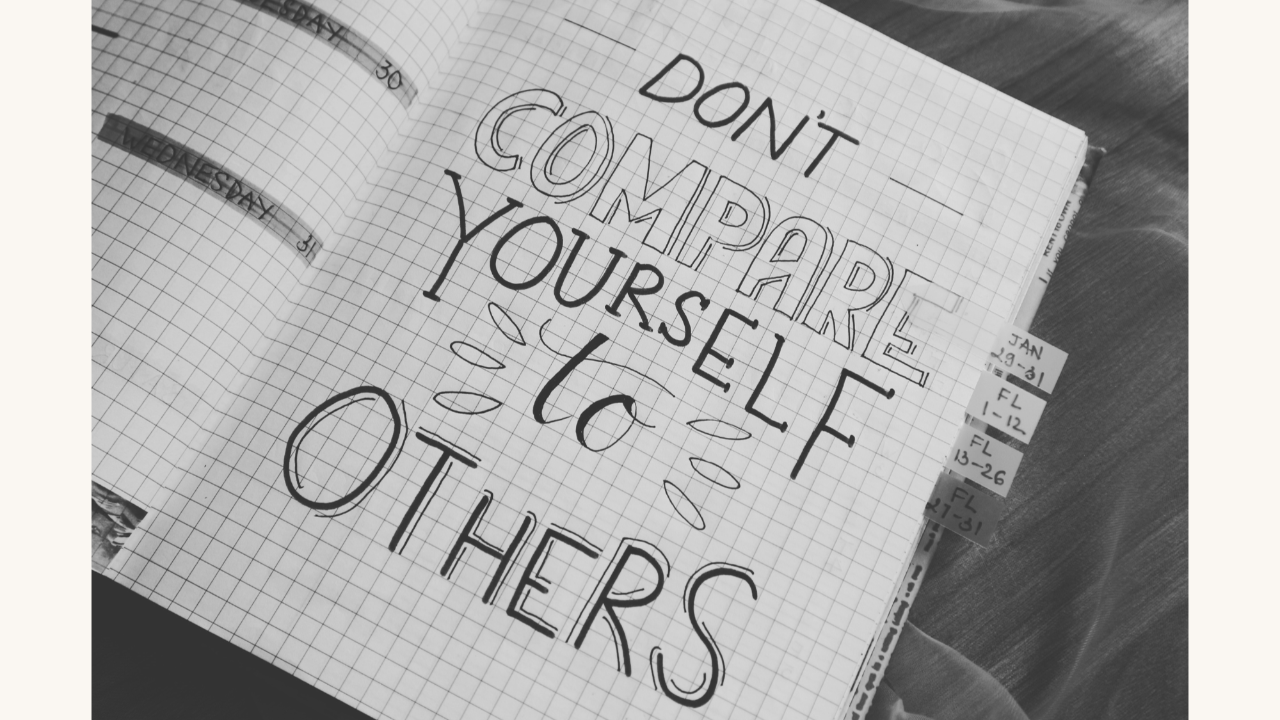
There's a particular quality of appreciation that becomes available when you stop measuring your life against everyone else's and start actually inhabiting your own. When you're not constantly comparing, constantly measuring whether your version of things is adequate by external standards, you can actually notice what's good about what you have.
Authenticity and gratitude are deeply connected in this way. Both require a fundamental willingness to be present with what is actually here rather than perpetually focused on what is elsewhere or not yet. When you live authentically you stop needing your life to look a certain way to feel valuable. And when you stop needing that, the genuine richness of your actual life becomes visible in a way it wasn't before.
10. You develop the clarity to hold your limits.
When you know who you are and what you value, the limits that reflect that knowledge become much easier to identify and hold. You're not making judgment calls in the moment about whether you're allowed to say no or whether your needs are important enough to voice. You have a foundation. A clear enough sense of your own values and your own worth that the limits flow naturally from that rather than requiring a constant internal negotiation.
This is one of the most practical expressions of authentic living. The woman who knows herself deeply doesn't agonize over every limit. She knows what she will and won't accept because she knows what she values and what she's worth. And that knowledge, built through the consistent practice of living honestly, is one of the most genuinely empowering things available to her.
The Courage Authentic Living Requires
I want to be honest about something before we close. Authentic living is not always comfortable. In fact, choosing your own truth consistently, in a world that will frequently prefer a more palatable version of you, takes real courage.
There will be people who preferred the version of you that was easier to manage. There will be moments when the authentic choice costs you something. There will be days when the performance feels safer and you choose it anyway, and that's okay, because authentic living is not about being perfect. It's about consistently, honestly, returning to yourself.
Every small choice in the direction of your own truth matters. Every moment you say what you actually think instead of what's expected. Every limit you hold. Every desire you honor. Every time you choose your authentic self over the approval you could have had by being someone else.
Those moments accumulate into a life. And the life they accumulate into is one that feels genuinely, unmistakably yours.
As Dr. Seuss put it with his particular kind of wisdom: why fit in when you were born to stand out?
Ready to Start Living as Your Most Authentic Self With 1:1 Support?
If you recognize yourself in this article and you're ready to start living more authentically with genuine support, coaching is a powerful space to do that work. As a certified life coach for women specializing in self-love and authenticity, helping women return to themselves and build lives that feel genuinely theirs is the heart of everything I do.
Book a free consultation call here. No pressure, just an honest conversation about where you are and what you want next. Or explore my 1:1 coaching packages here.
And if this resonated, these articles might too:
How to Overcome People Pleasing
Why You Feel Empty Even When Your Life Looks Fine
You were not put here to perform a version of yourself that makes everyone comfortable. You were put here to be yourself. Start there.
Author